
Stay Connected Anywhere with a Global eSIM
A traveler landing in a foreign country can switch their phone to a local network within minutes by scanning a QR code, rather than hunting for a physical SIM card. A global eSIM is a digital profile embedded directly into a device’s hardware, which can be remotely activated to connect to participating carriers worldwide. It eliminates the need to swap physical cards, allowing users to store multiple operator profiles and toggle between them via device settings. This provides immediate, flexible connectivity with the convenience of instant activation and no roaming-dependent hardware changes.

What Exactly Is a Global eSIM and How Does It Differ From a Physical SIM?
A global eSIM is a digital SIM profile embedded directly into your device, letting you switch between mobile carriers worldwide without swapping a plastic card. Unlike a physical SIM, which is a removable chip tied to one carrier, a global eSIM stores multiple carrier profiles—so you buy a data plan for, say, Japan’s network while still keeping your home number active on the same chip. The practical difference? With a physical SIM, you hunt for a local store, wait for activation, and risk losing the tiny card. With a global eSIM, you scan a QR code or tap an app in under a minute, even before you land. *Question: Do I need to remove my physical SIM to use a global eSIM?* No—you can run both simultaneously, using your physical SIM for voice and the eSIM for data abroad, which is impossible with two physical SIMs unless your phone has dual slots. This flexibility is why frequent travelers treat a global eSIM as a permanent part of their setup, while a physical SIM remains a dated, geographically fixed object.
The Core Technology: How a Rewritable Chip Replaces the Plastic Card

The core technology of a global eSIM replaces the physical plastic card with a rewritable embedded chip soldered directly onto your device’s motherboard. Instead of swapping a SIM, you download a digital profile—a secure file containing your carrier credentials—onto this tamper-proof chip. To switch networks abroad, you simply erase the current profile and write a new one, all through software. The sequence is clear: you scan a QR code, the chip verifies the carrier’s encryption key, then it rewrites its memory with your new subscription. This eliminates the need to carry, lose, or fumble with tiny plastic cards, as all carrier data lives permanently inside your phone.
One Profile, Many Networks: Understanding the “Global” Part vs. Regional or Single-Country Plans
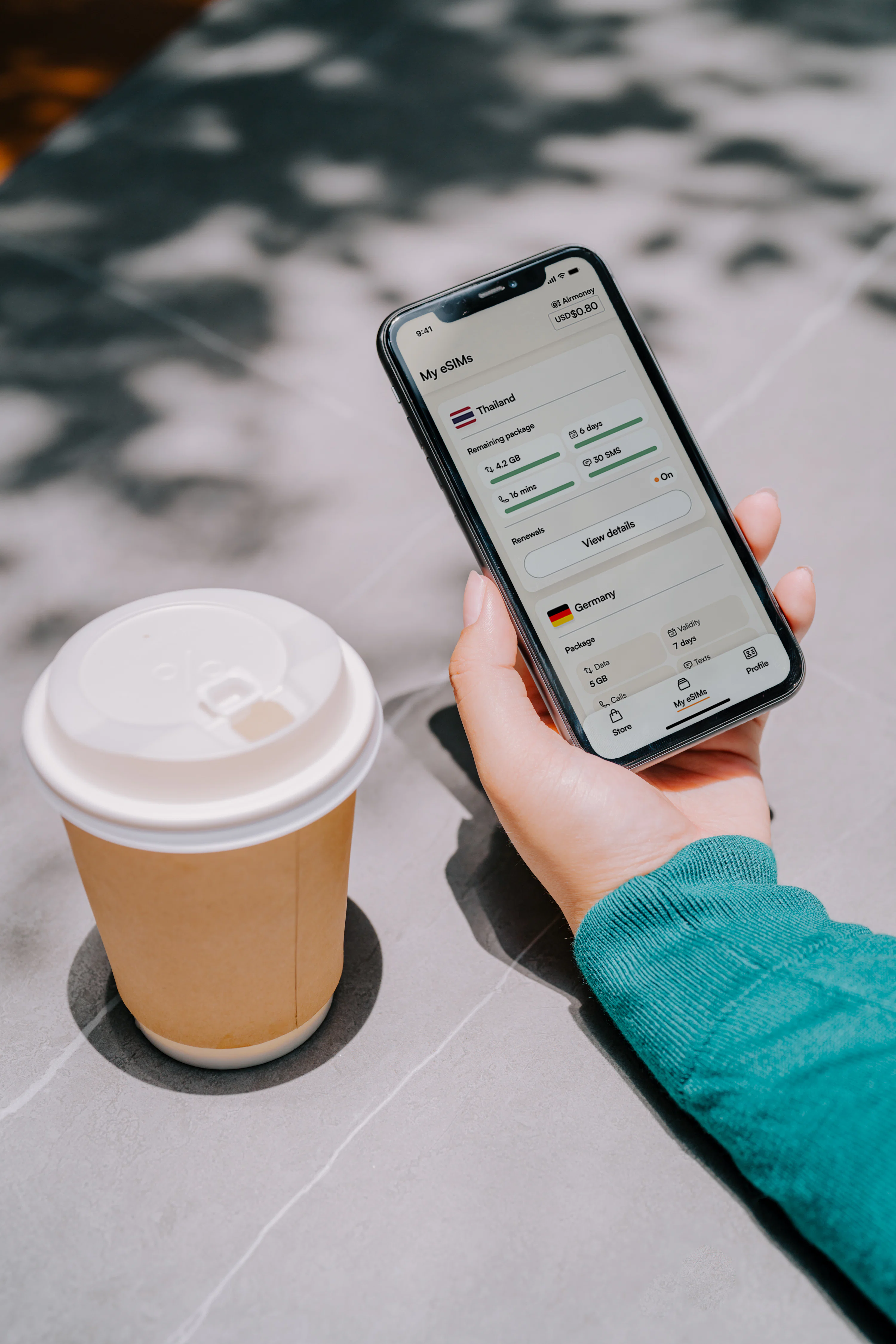
A single global eSIM profile is engineered to latch onto whichever partner network is available in your current country, automatically switching between carriers as you cross borders without requiring new downloads. This is radically different from a regional plan, which might cover a cluster like Europe, or a single-country plan, which locks you into one nation’s towers. The “global” part isn’t about unlimited reach—it’s about the profile’s ability to negotiate roaming on the fly, prioritizing cost and signal strength across dozens of destinations from one saved configuration. You buy once, install once, and the profile handles network selection dynamically. Regional and single-country eSIMs, by contrast, force you to pre-plan your coverage zone and often require reinstallation for adjacent trips. For frequent multi-destination travelers, dynamic network switching within one profile eliminates the hassle of juggling multiple eSIMs, making the global option decisively more practical.
A truly global eSIM profile dynamically switches between local partner networks across many countries, whereas regional or single-country plans restrict you to a fixed geographic zone with one installation.
How Do You Actually Set Up and Activate an International eSIM on Your Phone?
To activate a global eSIM, first confirm your phone is carrier-unlocked and supports eSIM. Purchase a plan from a provider like Airalo or Holafly; you’ll receive a QR code or installation link. Open **Settings > Cellular > Add Cellular Plan**, then scan the QR code or tap the link—the eSIM profile downloads instantly. After installation, label it (e.g., “Travel”) and set it as your data line. Activate by enabling cellular data for that line and turning on data roaming, as global eSIMs route through partner networks. Restart your phone if the network doesn’t appear. *Q: Why won’t my global eSIM connect? A: Toggle roaming off/on or manually select a network under Carrier Settings.* For multi-country trips, choose a regional plan so switching borders requires no reconfiguration—just keep the eSIM active.
Step-by-Step: Scanning a QR Code, Installing a Profile, and Managing Multiple Lines
Start by opening your phone’s Settings, navigating to Cellular or Mobile Data, and selecting “Add Cellular Plan.” Point the camera at the QR code your eSIM provider emailed you; if scanning fails, enter the activation code manually. Once the profile downloads, label it clearly (e.g., “Travel SIM”) and set it as your secondary line. For calls and data, choose which line is default, and toggle data roaming on only for the travel profile to avoid charges. Managing multiple lines becomes effortless once you switch between them via the same menu, enabling you to keep your home number active while using local data. Dual SIM workflows require disabling automatic switching if you prefer stable connectivity.
- Scan the QR code in a well-lit area; hold the phone steady for faster recognition.
- Rename each profile immediately to avoid confusion when toggling lines.
- Set the travel eSIM as the data line, but keep your home line for SMS and voice.
- Review per-line settings after installation to confirm roaming and default numbers.
Key Settings to Adjust: Enabling Data Roaming, Setting the Primary Line, and Choosing the Right APN
After installing a global eSIM, navigate to your cellular settings and toggle data roaming on, as international profiles require this for network access—this does not incur extra charges with most eSIM plans. Next, designate the eSIM as your primary line for cellular data while keeping your physical SIM for voice/SMS, ensuring calls don’t accidentally route through expensive home rates. Finally, verify the APN: most eSIMs auto-configure, but if speeds stall, manually input the provider’s APN (often “internet” or “global”) under “Access Point Names”—mismatched APNs cause connectivity drops. Reset network settings if the APN won’t save. Test by loading a lightweight page.
Enable data roaming, set the eSIM as primary data line, and confirm or input the correct APN—these three adjustments ensure stable, bill-safe international connectivity.

Troubleshooting Common Activation Hiccups: No Signal, “Profile Not Installed,” and Inactive Data
When your global eSIM shows **no signal after activation**, start by toggling airplane mode for 30 seconds—this forces a network re-scan. For the dreaded “Profile Not Installed” error, don’t panic; delete the eSIM from your phone’s settings, then re-scan the QR code with a stable Wi-Fi connection. Inactive data usually means your APN settings are blank. Manually entering the provider’s APN (often “internet” or “globaldata”) fixes 90% of these issues. If data still won’t light up, check your roaming toggle is on, then try:
- Restart the phone completely.
- Select the eSIM as your primary data line in SIM settings.
- Contact support to refresh the profile remotely—it takes under two minutes.
What Should You Look for When Comparing Different Worldwide Data Plans?
When comparing worldwide data plans for a global eSIM, prioritize the **actual coverage map over the advertised country count**, since many plans route through regional partners where speeds drop drastically. Scrutinize the data allowance’s fairness—look for a plan that specifies whether it’s a high-speed bucket that throttles after exhaustion or if it offers truly unlimited but deprioritized throughput, which affects real-world usage like video calls. Check the **tethering policy**, because some “unlimited” eSIMs forbid hotspot use or cap it at 0.5 Mbps, making them useless for a laptop. Also verify whether the plan includes top-ups for additional data at the same price, not a separate, inflated “renewal” tier. *A plan’s local-network partner for your primary destination matters more than its global tagline.* Finally, confirm that the eSIM profile supports dynamic switching between networks—essential for maintaining connectivity when crossing borders without manually re-provisioning.
Data Allowances vs. Speed Caps: Which Matters More for Your Travel Style
When comparing global eSIM plans, the trade-off between data allowances and speed caps hinges entirely on how you use connectivity. If your travel style involves streaming, video calls, or large file uploads, speed caps matter more for your travel style than raw gigabytes, because a 10GB allowance at 128kbps becomes nearly unusable for real-time tasks. Conversely, if you primarily need navigation, messaging, and email, a generous allowance with a modest speed cap—say 5Mbps—proves far more valuable, since these activities consume little data yet require responsive loading. For frequent short trips, prioritize allowances to avoid topping up; for extended remote work, prioritize uncapped speeds. Always check the *fair-use policy* to see whether “unlimited” plans throttle after a threshold, as that hidden cap will dictate your actual experience.
Coverage Map Realities: Checking Whether Your Destination Is on a Native Network or a Partner Network
Before purchasing a global eSIM, scrutinize the coverage map for your exact destination to see if it lists a native network versus a partner network. A native connection means the eSIM provider has a direct roaming agreement with the local carrier, offering more reliable speeds and lower latency. Partner networks often involve a secondary agreement, which can result in slower data, frequent re-authentication drops, and stricter fair-use limits. Zoom into the map, not just the country, but the region and specific city—rural areas on partner coverage may fall back to 3G. If the map only shows “partner” for your route, expect potential congestion and prioritize a plan with multiple native options in that country.

Plan Flexibility: Top-Up Options, Plan Lengths, and Whether You Can Share Data Across Devices
When comparing global eSIM plans, flexibility hinges on three practical factors. First, verify whether top-up options allow you to add data before depletion, and confirm if unused data rolls over or expires on a fixed cycle. Second, plan lengths typically range from 7 to 30 days, but some providers offer annual packages—choose a duration that matches your travel timeline to avoid paying for idle days. Third, check if the plan supports multi-device data sharing, usually via a hotspot tethering allowance or a companion eSIM profile for tablets and laptops. Be aware that some plans lock sharing to a single device, while others cap hotspot speeds, so read the fine print on device limits before purchase.
How to Squeeze the Most Value Out of Your Travel eSIM Without Getting Stung
You land in Lisbon, phone buzzing with a welcome SMS—your global eSIM is live. The sting comes later, buried in the fine print. To squeeze real value, buy a **regional or global data package** that covers multiple countries, not single-nation plans, so you’re not re-purchasing at each border. Install the eSIM before departure, but keep your primary SIM off to dodge accidental roaming charges. Use Wi-Fi for heavy downloads like maps or podcasts, saving your data for navigation and messaging. Watch for “fair use” caps—streaming video can silently burn your allowance. Always check the provider’s app for balance, and disable background app refresh on your phone.
The trick is treating your eSIM like a prepaid tank—refuel in chunks, not one giant splash.
Finally, keep a screenshot of your plan details offline; if coverage drops, you’ll know exactly what’s left without needing signal.
Buying Before You Fly vs. Purchasing Upon Arrival—Which Saves You Money and Headaches
Buying your eSIM before departure usually wins on price because local tourist data packs sold upon arrival carry markups, especially at airport kiosks. However, purchasing upon arrival offers flexibility for uncertain itineraries, letting you compare live network options without committing to a plan that may not cover all your destinations. The real headache is timing: a pre-purchased eSIM activates immediately via QR code, avoiding airport Wi-Fi queues, but if delays or cancellations shift your arrival, you may lose activation days. Conversely, on-ground buying lets you test signal strength first, but risks price surges at transport hubs. Saving money hinges on stable itinerary planning, while avoiding headaches requires accepting that arrival-day flexibility often costs a premium.
Avoiding Hidden Costs: Why Billing in Your Home Currency and Transparent Fair Usage Policies Matter
Avoiding hidden costs starts with **billing in your home currency**. When an eSIM provider charges in USD or EUR while your card is in GBP, you absorb opaque conversion markups—often 3–5% on every top-up. Insist on providers that price and settle in your native currency, so the rate you see is the rate you pay. Equally critical is a transparent fair usage policy. Vague “unlimited” plans frequently throttle after a soft cap, leaving you with unusably slow data mid-trip. Before buying, verify Best Asia eSIM the exact high-speed threshold and the post-cap speed. If the policy is buried in fine print, walk away. A provider that shows these numbers plainly is one you can trust to never sting you.
Keeping the Plan Alive: Using Wi-Fi Calling, Managing Hotspot Usage, and Avoiding Accidental Overage Charges
To keep your travel eSIM alive, treat Wi-Fi calling as your secret weapon: toggle it on before you leave so calls and texts route through hotel or café Wi-Fi, burning zero data from your plan. For hotspot use, dial back background app refresh and video auto-play on connected devices, and keep a strict eye on your data counter in your phone’s settings—tethering drains eSIM data shockingly fast. Avoid accidental overage charges by disabling auto-updates and setting a low-data alert, not just relying on your carrier’s generic warning. Managing hotspot usage wisely is your best defense against surprise fees.
**Q: How do I prevent accidental overages while hotspotting?**
A: Set a hard data limit in your OS and pause tethering the moment you hit 80%—don’t wait for the “you’re out” text. Also, mark your eSIM as the “primary data line” only, so apps can’t silently switch to a costly roaming backup.
What Are the Practical Limitations and Everyday Workarounds for a Digital SIM?
Practical limitations of a global eSIM include device lock-in, as older phones or carrier-locked models may reject remote provisioning. Battery drain can increase slightly when switching profiles, and coverage gaps appear when the eSIM lacks a local network agreement, forcing fallback to expensive roaming. Everyday workarounds include downloading multiple regional eSIM profiles in advance and toggling them in settings, using Wi-Fi calling to bypass cellular reliance, and keeping a physical SIM in the second tray for critical numbers. For frequent travelers, a dual-active setup (eSIM for data, physical SIM for calls) is common. If a profile fails to activate, resetting network settings or re-scanning the QR code often resolves it, though hotspot sharing speeds may be throttled.
Always verify which bands your phone supports, as a global eSIM’s fallback network may only offer 3G in remote areas, making offline maps a necessary companion.
Can You Use It in a Phone Without eSIM Support—And What About iPads, Smartwatches, or Laptops?
If your phone lacks eSIM support, a **global eSIM is not directly usable**—you cannot force it into a non-eSIM device. The only hardware workaround is using a physical SIM adapter that some providers sell, though this is rare and requires a removable eSIM chip, not a standard QR-code activation. For iPads, models with cellular capability (iPad Pro, Air, and mini since 2020) accept eSIMs, but Wi-Fi-only iPads cannot. Smartwatches with standalone eSIM (like Apple Watch Series 4+ or Samsung Galaxy Watch 4+) work independently, yet many require carrier-specific plans. Laptops are trickier: only select Windows laptops (Surface Pro X, ThinkPad X1 Nano) and newer MacBooks with cellular modems support eSIM, so most laptops still need a portable hotspot from your phone.
- Non-eSIM phones: use a physical SIM from a global provider or a hotspot device.
- iPads: check the model number—only cellular variants include an eSIM slot.
- Smartwatches: verify your carrier offers a standalone wearable eSIM plan, not just a companion iPhone plan.
- Laptops: if no eSIM modem, rely on your phone’s hotspot or a USB dongle.
What Happens to the eSIM When You Switch Phones or Reset Your Device?
Switching phones does not physically move the eSIM; the profile remains tied to the original device until you delete it remotely or via the old handset. On most global eSIM providers, you must scan a new QR code or re-download the profile from your account dashboard to activate it on the replacement phone. A factory reset, however, typically erases the eSIM profile entirely, leaving the chip blank but the carrier-side subscription intact for reinstallation. **Re-downloading the profile after reset** is the standard workaround, but some providers limit the number of reactivations per billing cycle, so check your quota first.
Q: Does resetting my device permanently delete my global eSIM plan?
A: No—the plan stays active on the carrier’s server, but the profile on your device is wiped; you simply reinstall it via the provider’s app or a new QR code after the reset.
Battery Drain, Signal Strength, and Multi-Country Transitions—What’s Real and What’s a Myth?
The myth that an eSIM inherently drains your battery faster than a physical SIM is largely unfounded; the modem’s power draw during active signal scanning is the real culprit, not the SIM format itself. In practice, global eSIM signal strength issues arise when a digital profile lacks carrier aggregation or uses a less optimal roaming partner, causing the phone to boost transmission power. Multi-country transitions add genuine strain, as the device repeatedly rescanning bands across borders can temporarily spike battery usage and show fluctuating bars. This is a real, short-lived effect, not a permanent drain. Workarounds include manually selecting a network after landing and pre-downloading profiles to avoid continuous background searches that falsely suggest weak signal.